When it comes to you business, one of the most important business assets you need to protect is your brand. It’s how people perceive your business, the feeling they get when they see you, and how you show up. Your brand is what builds trust and recognition, and ultimately one of the most powerful driving forces behind closing the sale.
Along with your logo, colors, and font – your imagery is a core element to building a unique brand. It’s why we take so much care to learn about a business before we create their imagery, so that we can capture the brand’s essence and story.
But what if your business decides to try AI images to save on costs? We understand, as a small business ourselves, the need to balance finances, prioritize investments, and make strategic decisions about where to invest our funds. But it’s also important to understand the potential pitfalls before making a decision. Especially if the pitfall could silently be killing our branding without even knowing it. Using AI imagery is no different.
The Social Platform Research
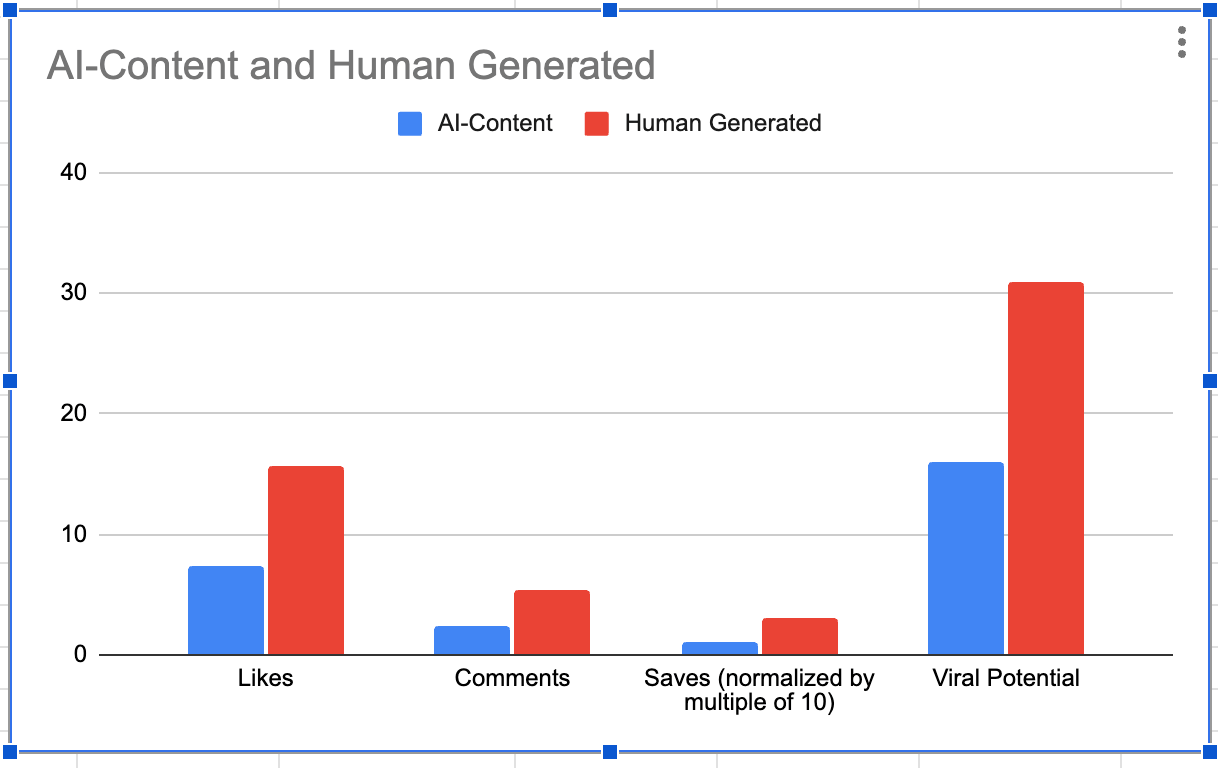
I came across this thought when browsing (let’s be honest, doom-scrolling) through social media. It started by noticing some brands mixing AI imagery with raw, authentic cell phone photos. What I started noticing was interesting – the AI content generally had far less engagement. Fewer likes, fewer comments, almost never was saved. And this went for any AI images – whether it was an authentic photo of their product in an AI environment, or it was 100% AI generated content. The results were almost always the same – less overall engagement.
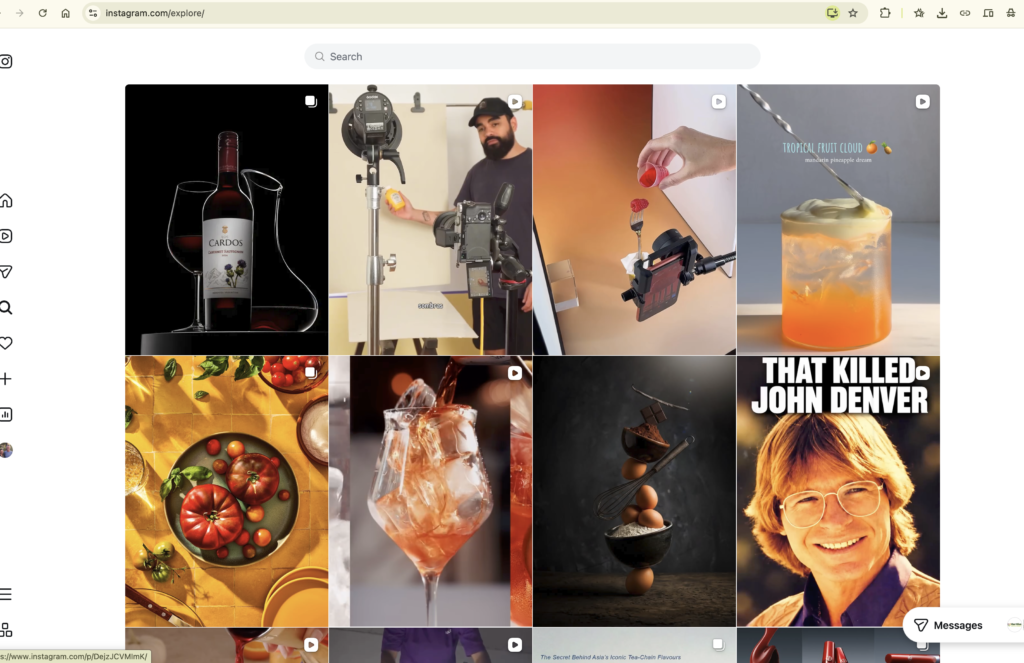
This made me curious, so I decided to hit the explore page to extend my data sample. And what I found further raised my curiosity. Through a never-ending scroll of the explore page, I came across almost no AI generated posts. It was as though we went back a few years to before AI even existed – there was nothing to build or extend my research on, because everything was human generated.
I was left asking myself “what is happening? Why is there no AI-generated content in the explore page – especially in a time when there’s so much cost-cutting and AI deployment to cut costs and improve consistency”?
Where could I find the answer? Surely others have noticed this and done similar research – so what did they have to say?
The Research Research
Breaking into the research online only solidified what I was seeing – but with statistics that were even beyond what I imagined. According to sources, human created imagery gets up to 61% higher like rate[1], 35% higher comment volume[4], 200% higher save rate[2], and a 50% higher share rate via stories and DM’s[2]. Additionally, it was found that of 47 viral posts, 31 were human created[2].
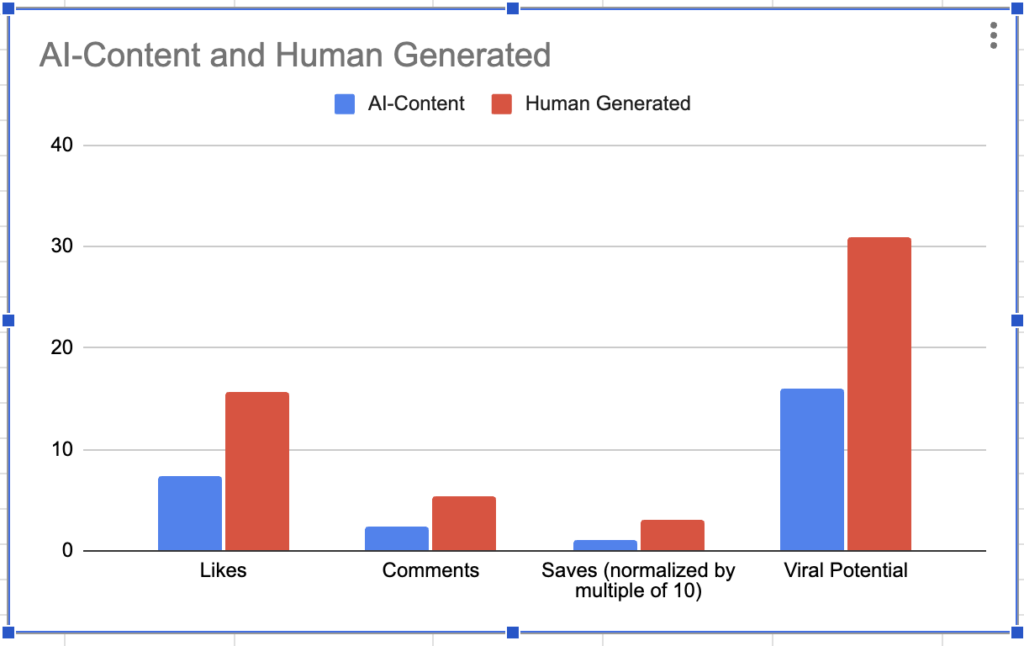
While those were somewhat surprising statistics that reinforced what I was seeing, they were not even close to the most surprising brand impact I found. The most surprising statistic was by far the 500% long-tail reach decay on AI generated content as a whole.[1]
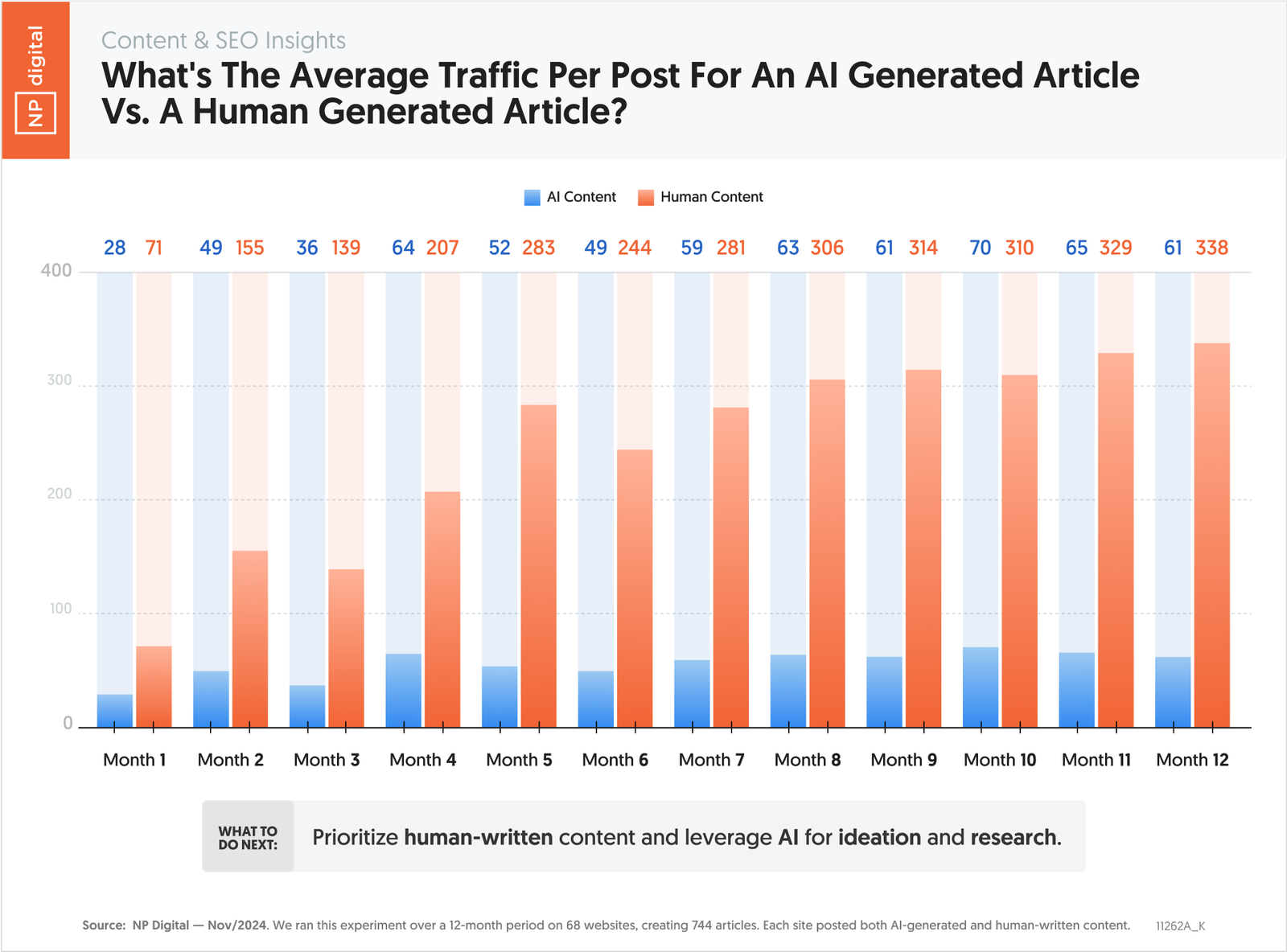
What is long-term reach decay? This is to say that when your brand deploys AI generated content to your socials, that post begins to die almost immediately – if a viewer doesn’t see it at the moment it’s posted, it’s not ever likely to get in front of them. However, when human created content is deployed, it likely is to continue growing in organic search and social discovery.
This long-term reach decay can be directly associated with the dwell time mechanism, and also explains why I found no AI generated content on the Instagram Explore page. The problem lies in the fact that when viewers come across AI generated content, they can immediately spot unnatural textures, confusing lighting, or gaps in the storytelling. This results in viewers immediately scrolling past the post. Alternatively, when viewers scroll across human-generated content, they tend to dwell on that photo a little longer. The social media algorithms reward these dwell time increases (0.6s–1.1s for AI images vs. 1.8s–2.5s for real photos)[1] with the understanding that viewers are more interested in the content, and they continue to push it to a wider audience.
If paying a little to the social platform to boost that AI content over human generated is something you think will get you over that hump – think again. When human-generated content was used over AI-generated content, short term sales intent went up by 14% and brand equity was up to 17% stronger.[3]
AI Images and the Cost To Your Brand
Given the statistics above, you can clearly see the impact that non-human generated content can have on your growth when it comes to social engagement. But the impact isn’t limited to a simple social scope – it can more importantly have a direct impact on your brand as a whole.
There are many reasons AI-generated content doesn’t get the same engagement as human-created content. Especially in a time when it’s such a hot topic for debate, different individuals are unsupportive of AI content for a multitude of reasons: environmental impacts, ethical dilemmas, copyright and legal disputes, and more. But beyond those high-level disputes, there’s a core of emotion that the AI generated content leaves individuals feeling: distrust, unengaged, and unaligned with a brand.
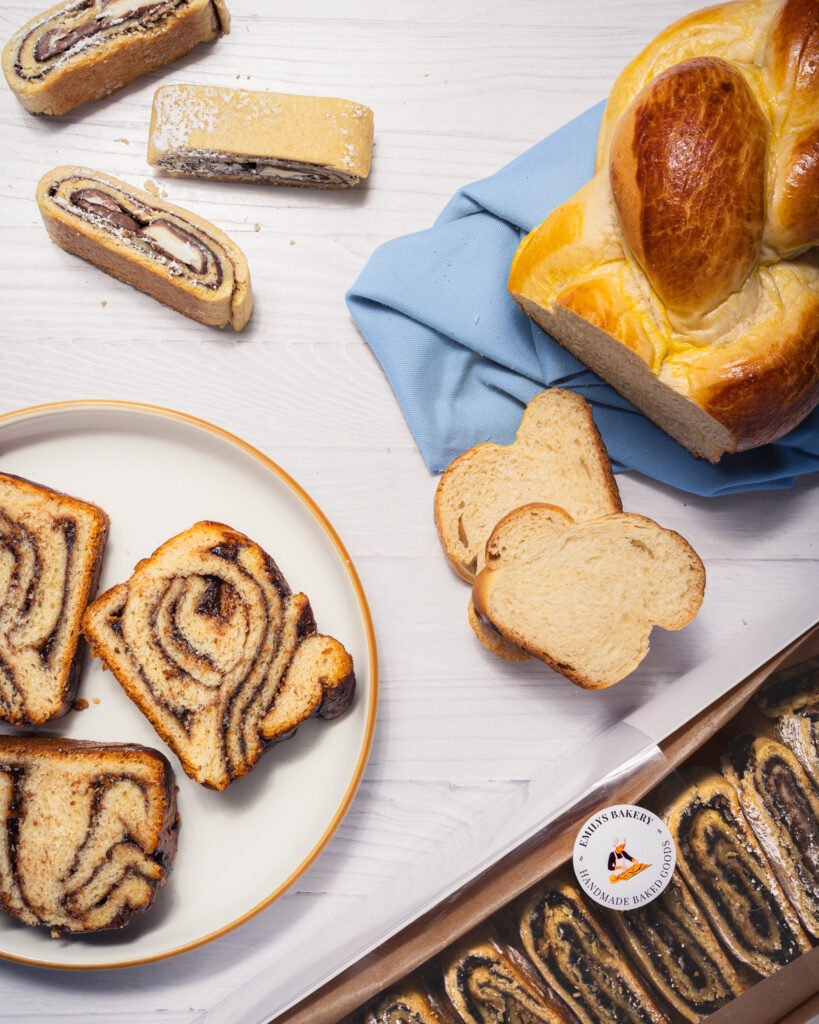
Additionally, it commonly results in an erosion of premium brand positioning. How your images present your product to your audience allows them to see the perceived quality, craftsmanship, and attention to detail. Your images should showcase everything you’ve put into building your product, but when left to AI generated content – audiences commonly infer that your brand takes shortcuts to achieve results – resulting in an erosion of trust and value. This is known as the inferred effort penalty, and it’s directly related to brands taking shortcuts, and leaving their audience to deduce that if they are taking shortcuts on their presentation, they must also be cutting corners on other aspects of their business.
Most importantly, AI generated content leaves a visual homogenization and results in a loss of cultural and emotional resonance. Your brand has a unique style and story to tell, yet the AI generated imagery gravitates towards an over-generalized baseline of style. It’s tendency to over-polish textures, create uniform or erroneous lighting, and unnatural patterns diminishes the ability to capture attention. At the same time, the storytelling and human connection is often left feeling emotionally sterile, weakening the emotional connection that drives long-term customer loyalty.
So much of this reflects back on your brand and business. And when viewers begin to see your business in a way they don’t resonate with, you lose their attention and buying power. The worse possible outcome, they start to distrust your brand and what you offer. For something that takes so much effort to earn in the first place, giving a reason to distrust your brand can not only lose new customers – it can be a difficult, if not impossible, task to earn that trust back and return those buyers to your ecosystem.
Balancing The Cost/Value Benefit For Your Business
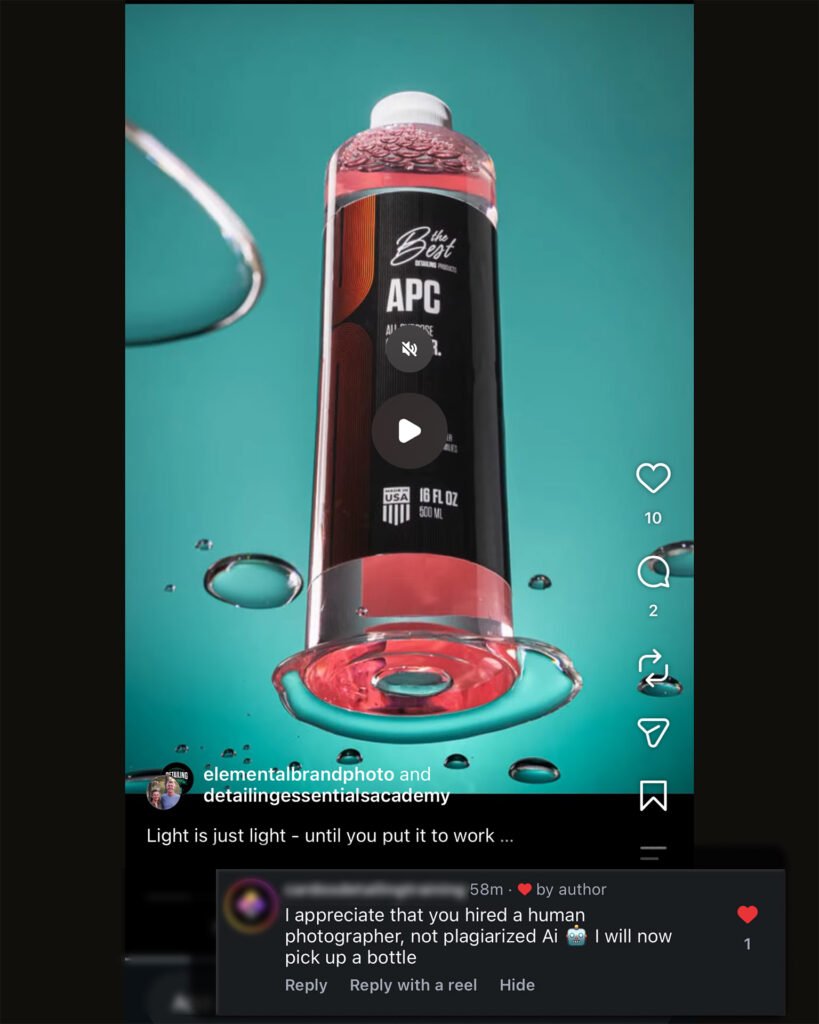
When learning about how AI generated content impacts growth and success for small businesses, the impact I see to brands both that use it for their content and the support for the businesses that do not, becomes much clearer. It’s also a clear identifier of why there’s been so much positive response to the images we’ve created for the brands we work with. The most memorable post I’ve seen being from a customer who saw one of our partner’s posts, and stated because they are not using AI generated content – they were going to be reaching out, buying the product, and supporting the business. Support like this is exactly what you should want for your brand!
How you manage your content is something that only you can decide for your brand. But, it’s important to be aware of the impacts that it could have on your business – especially if it holds the power to push potential buyers away, erodes trust, or impacts your business growth. But when deciding where to spend your resources, it’s also important to understand how it will impact your brand – both near term as well as in the future. If a tactic that you deploy has the ability to completely erode the trust and value that your brand has worked so hard to achieve, you have to ask yourself:
what impact does this approach have on the success of the business you’ve worked so hard to create?
When you’re ready to deploy imagery that’s authentic, aligned to your brand, and tailored specifically to reach your audience and increase sales – don’t hesitate to reach out. We’ll get a discovery conversation scheduled so we can learn about your brand and it’s goals, and explore ways we can create assets that help you show up authentically, showcase your quality, and help your brand reach new audiences.
[1] Patel, N. (2026, Aug.). AI vs Human Content: Which Performs Better on Social? NP Digital. neilpatel.com.
[2] Patel, N. (2026, Jun. 14). We Analyzed 10,000 Posts: AI vs Human Content Performance (2026 Data Study). Picmin. picmin.com.
[3] Ipsos & Syracuse University S.I. Newhouse School of Public Communications. (2026, May 18). AI Ads Are Good Enough — And That’s the Problem. ipsos.com.
[4] Partridge, Jamie (2026, June 25). Does AI Content Actually Perform Well on Social Media? What the 2026 Data Really Shows. PostEverywhere. posteverywhere.ai.